
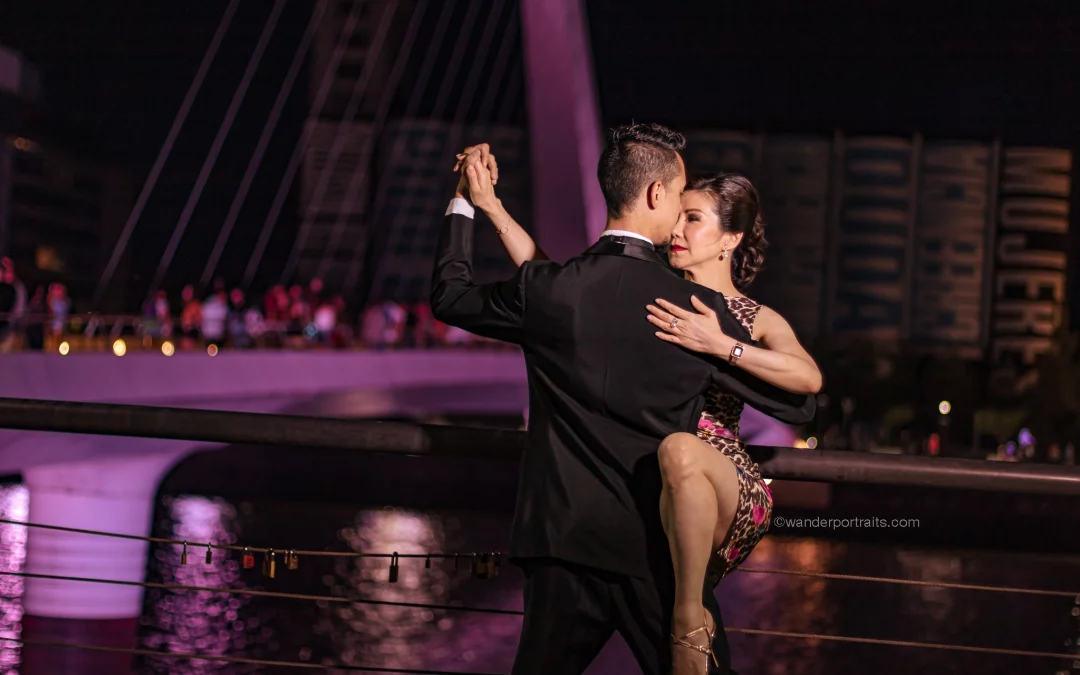
To experience Buenos Aires’ social tango culture, visit a milonga: a gathering where people come together to dance.
You can also go to listen and watch. If you’re new to tango, choose an evening with a beginner class; if you prefer to stay seated, ask about visitor seating when planning your visit.
Each place has its own atmosphere, and the event happening that day matters as much as the venue. Here are five options to consider, along with a few practical details to help you enjoy your first evening.
What is a milonga?
In Buenos Aires, milonga commonly means a social tango event. People meet to dance, listen to music and spend time together. The word is also used for the venue hosting it.
You may also hear milonga used to describe a musical genre and dance, alongside tango and tango vals. Its meaning depends on the context: someone inviting you to “a milonga” usually means the social gathering.
Tango’s cultural importance extends beyond the dance floor. UNESCO added it to its Representative List of the Intangible Cultural Heritage of Humanity in 2009, recognizing the shared tradition of Argentina and Uruguay.
Five milongas and tango venues to consider
These places offer different ways to approach an evening of tango. Before going, confirm the specific event, address, admission price and whether a class or table reservation is available.
Salón Canning for a classic tango setting
Address: Av. Scalabrini Ortiz 1331, Palermo.
Salón Canning is an option I would consider for its traditional dance-hall atmosphere. It hosts different milongas, so look beyond the venue name and check who is organizing the event on your chosen date. The Association of Milonga Organizers lists several events at this address.
You can consult A Puro Tango’s announcements for its current event details. Confirm the venue and reservation arrangements before setting out.
La Viruta Tango Club for classes and a lively evening
Address: Armenia 1366, Palermo.
La Viruta Tango Club combines social dancing with classes for different levels. Its program includes tango and other dance styles, and it welcomes an international audience.
If you’re curious about trying tango, I would look at the beginner class first. It gives you a chance to learn a few basics before deciding whether to stay for the milonga.
Check the class level and starting time rather than assuming that arriving during the social dancing will include an introduction.
La Catedral for a more relaxed atmosphere
Address: Sarmiento 4006, Almagro.
La Catedral Club brings a bohemian setting to the experience, with an informal atmosphere and a program of tango classes and activities. Its official website lists the current class information.
I would consider it if a formal dance hall feels a little intimidating. You can start with a class and give yourself time to become comfortable with the music and the space.
El Beso for traditional social tango
Address: Riobamba 416.
El Beso is a longstanding tango venue with classes and a varied calendar of milongas. Its program includes both afternoon and evening events, which is useful if you would prefer an earlier outing.
This is an option to explore if you’re interested in the customs of social tango. Check the specific milonga listings to choose an event that suits your experience and plans.
La Baldosa for a neighborhood milonga
Venue: Salón El Pial, Cnel. Ramón L. Falcón 2750.
La Baldosa offers another way to explore the city’s tango scene beyond the areas where you may be staying. The city’s official milonga directory lists it at Salón El Pial, with classes as part of its offering.
Check the organizer’s latest announcement and plan your journey there and back. If you want to join the class, confirm its starting time separately from the milonga.
Can you visit a milonga without dancing?
Yes. You can enjoy the music and watch without joining the dance floor. Let the organizer know that you’re coming mainly to observe and ask about seating.
Remember that you’re sharing a social space with people who are there to dance. Keep the floor and its entrances clear, and give yourself time to settle into the atmosphere.
What should you wear to a milonga?
There is no single dress code for every milonga. Some events are more formal, while others are relaxed. Smart-casual clothing is a useful starting point, but check the specific event.
If you plan to dance, prioritize clothes you can move in and secure, comfortable shoes. For a first class, ask the teacher what footwear they recommend. You don’t need to buy a complete tango outfit before trying it.
A few tango customs worth knowing
- Mirada and cabeceo: Eye contact and a small nod are a traditional way to invite someone to dance. Look for a clear response and respect a declined invitation.
- Tandas and cortinas: Music is commonly organized into sets called tandas, separated by short musical breaks called cortinas.
- The ronda: Couples move around the floor counterclockwise. Follow the flow and keep your movements appropriate to the available space.
- Learning and social dancing: Save corrections and practice exercises for a class or práctica rather than giving unsolicited instructions during a dance.
You don’t need to memorize everything before arriving. Observe the room, be considerate and ask the host when you’re unsure.
As a photographer, I would add one more thing: ask about photography before taking pictures. Get permission for close-up photographs, avoid flash and keep your phone or camera out of the dancers’ way.
Which Buenos Aires neighborhood is famous for tango?
San Telmo is one of the neighborhoods most closely associated with tango, with a strong cultural scene and several venues where you can watch performances.
But the milonga scene extends across Buenos Aires. Palermo, Almagro and other neighborhoods offer their own places to dance and listen.
For a first visit, I would choose the event that interests you and then plan your route, rather than limiting your search to one neighborhood. Check Milongas en Buenos Aires to explore options by day, area and availability of classes.
Is it worth going to a tango show in Buenos Aires?
Yes, if you would enjoy a professional performance with an arranged program and audience seating.
A milonga centers on social dancing. A tango show presents a staged performance for an audience. Both can be meaningful ways to experience tango; choose according to the kind of evening you want.
For a show, one option I recommend is El Viejo Almacén, in San Telmo. It offers show-only and dinner-and-show packages, so you can choose how to organize your evening.
El Viejo Almacén is one of my partners. Book any of their regular packages and enjoy a VIP upgrade by mentioning “WanderPortraits by Gissel” when you reserve.
Book with El Viejo Almacén through my recommendation.
Whether you try your first steps or spend the evening listening, give yourself time to enjoy it. You don’t need to know every song or understand every movement to find something you love about tango.
See you in Buenos Aires,
Gi.